
At Agoda, we love a challenge, and taking on a new technology is no exception. Welcome to Part Five of our AI in Creativity series, where Jennifer Jones (Global Brand Creative Senior Manager) shares how the Brand Creative team experiments with GenAI to boost creativity, streamline our processes, and do more with the resources we have.
At the start of our journey, Agoda’s Brand Creative Team set out with one goal: to explore how AI could help us scale creative production without sacrificing quality. We didn’t know exactly where it would lead, but we committed to experimenting openly, quickly, and as a team.
We started small: building a proof of concept, testing tools in isolation, and identifying the areas where AI could help most. We ran hackathons to explore new workflows, reimagined how we created videos at scale, and reworked our processes to embed AI into our everyday practice. Along the way, we made mistakes, shared breakthroughs, and kept learning.
Now that AI is fully embedded in our creative workflow, we’re not looking back. We’re looking inward. This final post in our AI in Creativity series is a reflection on what we learned from integrating AI and what advice we’d share with others embarking on their own creative journey.
Lesson 1: Treat AI like a team member, not a magic wand
One of our earliest realizations was that AI doesn’t remove the need for creativity; it makes space for it. The tools can generate, translate, resize, and automate. But they still need to be guided by our vision, storytelling, and ability to connect with people.
“AI is a great assistant, but it’s not the creative director. It lets us, designers, spend more time being creative. For example, when I had to design social posts for a campaign, I listed a few ideas and used AI to generate the background scenes for our Agoda mascot. By using AI, I save a lot of time creating an image, so I can test, see the result and quickly adapt if my initial idea can be improved to better suit the requirements.”
– Por Wirinchuon, Designer

This mindset shift helped us define how to use AI with intention. We didn’t add every new tool to our toolbox. Instead, we asked: will this make us faster, better, or smarter? If not, we moved on.
Lesson 2: Build a culture of experimentation, not just adoption
Technology moves fast. But changing team culture takes time. To get AI into the hands of every designer (not just the early adopters) we had to normalize experimentation.
We created space for sharing wins and failures in team meetings, set up a dedicated chat thread for AI discoveries, and asked everyone to test AI with real projects, not hypotheticals. We also tracked what worked (and didn’t) in a shared sheet, encouraging transparency and team learning.
“Our team is always excited to experiment with new tools and exchange insights. Our collective experience allows us to tackle a wide range of projects together, each bringing fresh ideas and diverse perspectives.
One time, I was struggling to get a smooth transition between two scenes while keeping the characters features consistent, but then a colleague shared a tool he’d just used for a different project with a tip for getting the result I was looking for. The tool allowed me to control the movements of the character between the scenes while maintaining their facial features. This type of precise control was previously impossible to achieve.”
– Ilham Prasetya, Design Manager

The more we treated testing as part of the job, not an extra task, the more momentum we gained. Curiosity turned into confidence. Leveraging AI became second nature.
Lesson 3: Let the work guide the tool (not the other way around!)
As we scaled production, we quickly learned that AI isn’t the best fit for every part of every project. Complex animation? Authentic accents? Traditional tools still often win out. But for reducing manual work and creating high-volume, adaptable content, especially in multiple languages and formats, AI gave us superpowers.
We gained this clarity by meticulously documenting the time, output, and results for similar projects with and without AI tools. We didn’t rely on gut feel: we measured, iterated, and improved.
“AI cuts down on busywork, allowing us to move so much faster. I’ve found tools that automate tedious editing tasks like background removal, object removal, and color correction, which used to take me hours with traditional software.
AI has also transformed how we source visuals. There’s a new world of tools that can generate tailored images from specific prompts. Instead of endlessly searching through stock photo libraries for a ‘good enough’ image, I can create the exact image I envision within moments, with far less manual effort.
Early on in my AI journey, I did struggle to write those prompts well. That was until I realized I could use an AI assistant to help generate them! The entire process is now incredibly efficient, freeing me up to focus on bigger creative ideas that require traditional tools and years of expertise.”
– Eak Natthai, Associate Design Manager

Lesson 4: Empower your team with ownership
The biggest breakthrough wasn’t technical, it was cultural. We gave every designer ownership of the AI process. They chose the best tools for their projects. They created assets for real use cases, not just tests. They shared their learnings with colleagues. And when something worked, they were the ones who got the credit.
That accountability led to stronger buy-in, and more innovation. When you trust people with the process, they won’t just adopt it. They’ll improve it.
“For a recent ad campaign, I used AI as part of the process—not the whole solution. We received a brief to create an ad campaign for the Japan market and my manager suggested using AI tools to create this ad. We had recently completed a stack ranking test of seven popular AI image tools, so I had a good idea of how to get started.
I started with sketching the storyboard myself, then used two AI tools to generate the images and add movements. After hand-picking the best AI output, we put everything together using traditional video editing tools.
The mix of human direction and AI acceleration let us deliver the campaign in less time than a traditional shoot, while still achieving quality outputs. For me, that was empowering: I could decide when AI added value and when traditional methods were faster or more reliable.”
– Belle Deeyai, Senior Designer

Practical tips for starting your own AI in Creativity journey
If you’re just beginning to integrate AI into your creative team, here’s what we’d recommend:
- Start with real work: Don’t just run simulations. Ask your team to recreate an existing asset or tackle a real brief using an AI tool. See what changes.
- Record your process: Track time, effort, and output to evaluate if a tool is worth keeping.
- Move fast: Test quickly, decide quickly. If a tool doesn’t add value, move on.
- Keep it visible: Celebrate successes. Share failures. Talk about AI regularly in team meetings.
- Build community: Use a shared chat thread to exchange interesting articles or tips for getting better results.
- Keep the momentum alive: Encourage everyone to keep experimenting, challenging their assumptions, and finding new approaches. This isn’t a one-off project. AI is here to stay.
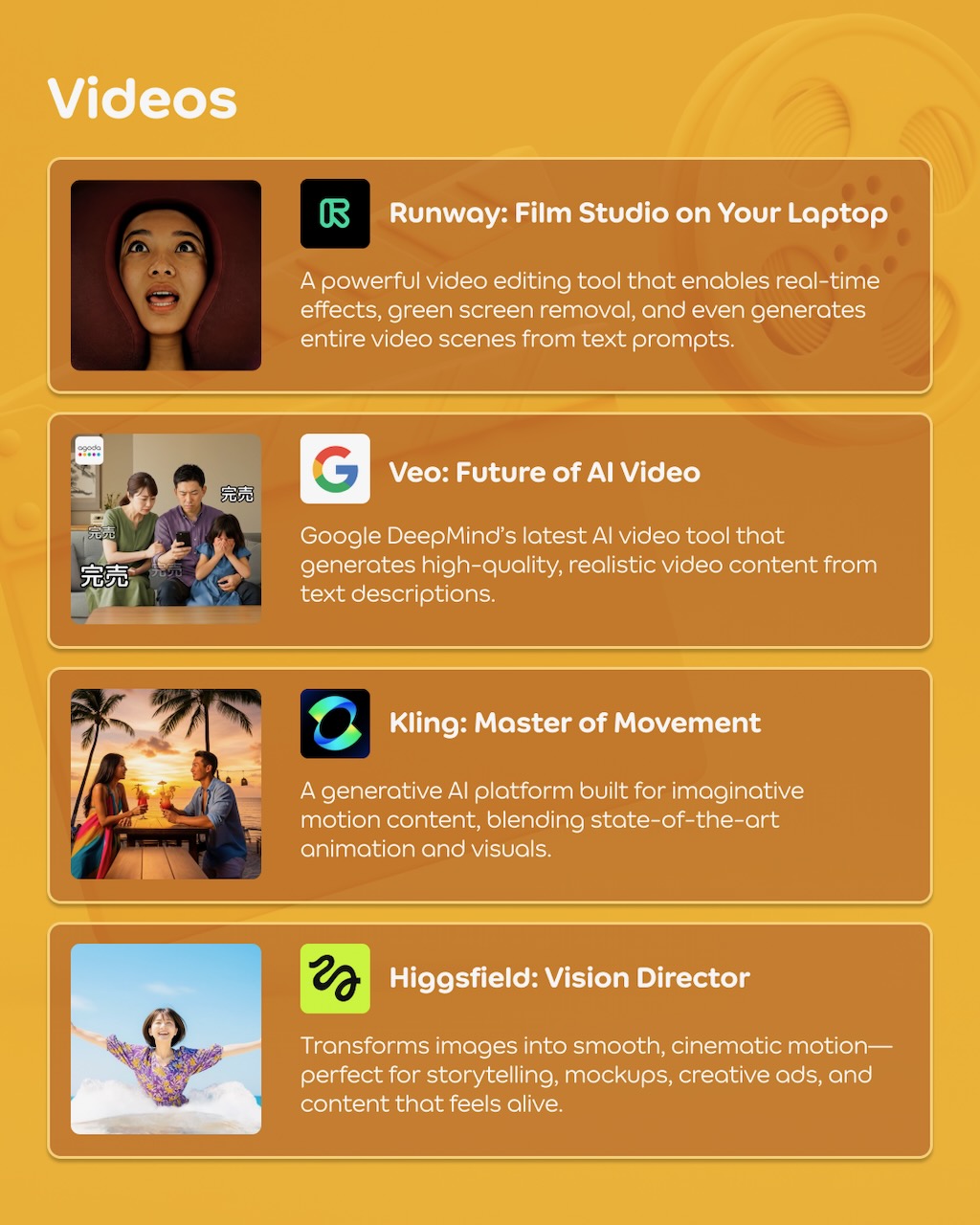
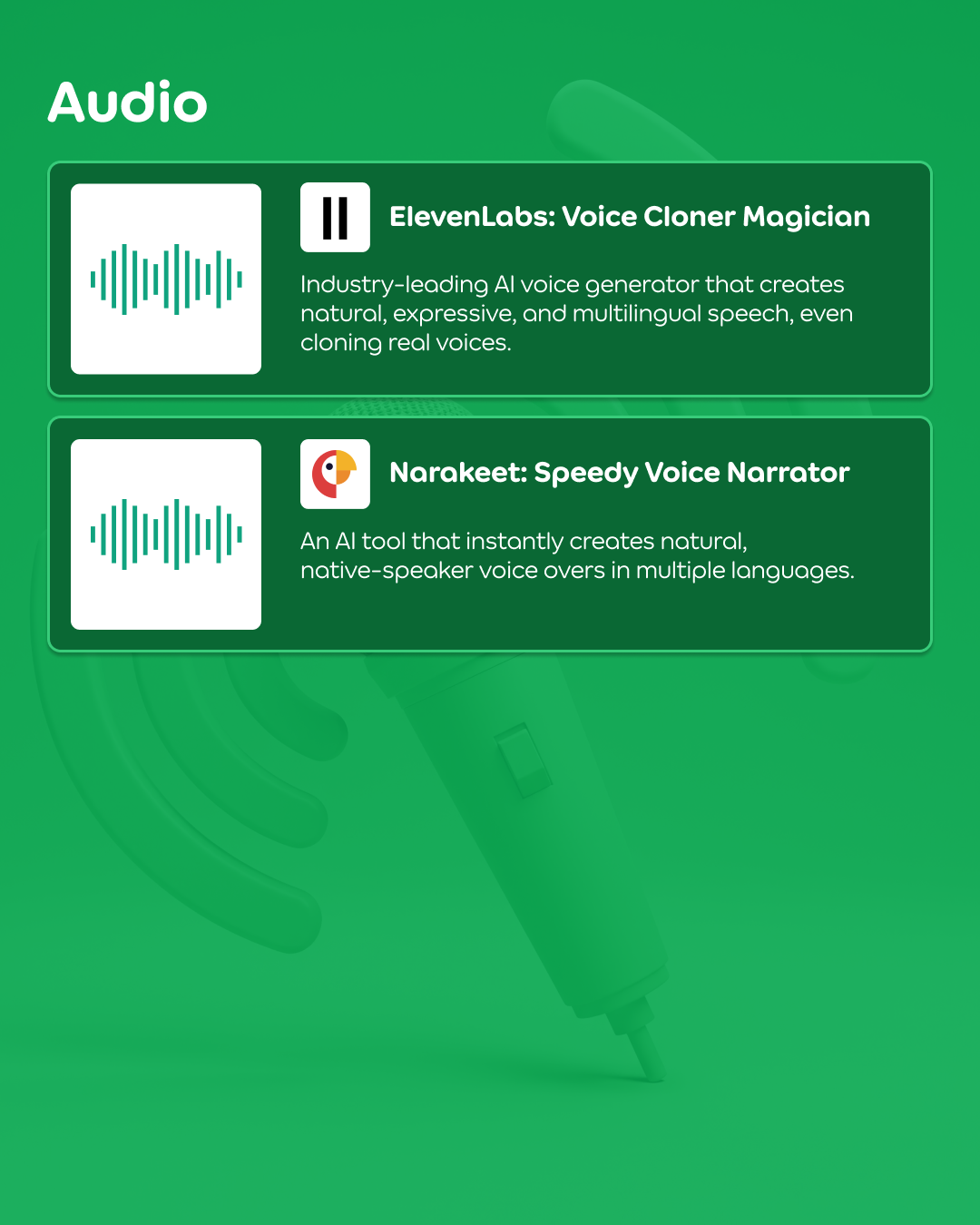
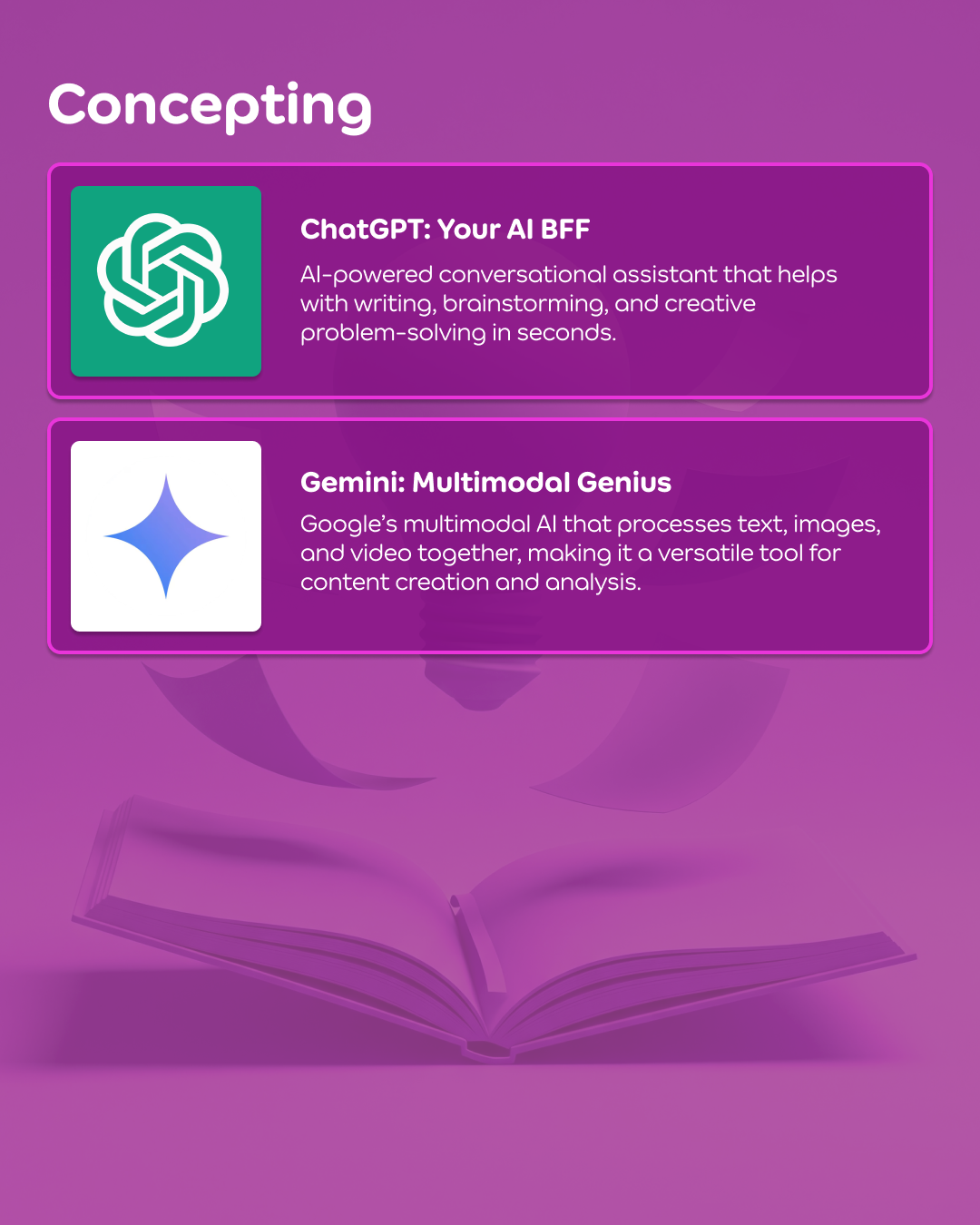
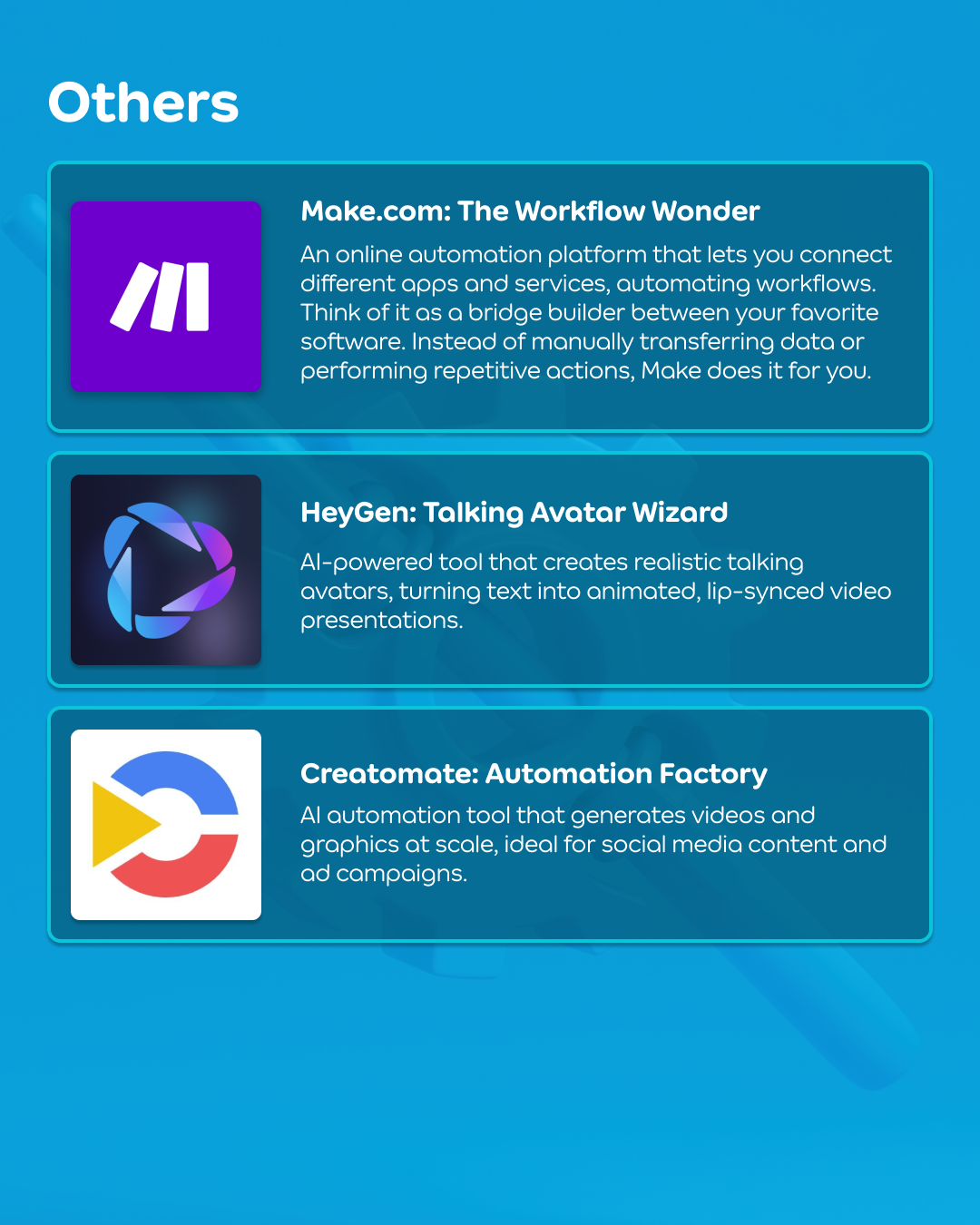
Our recommendations: The best creative AI tools
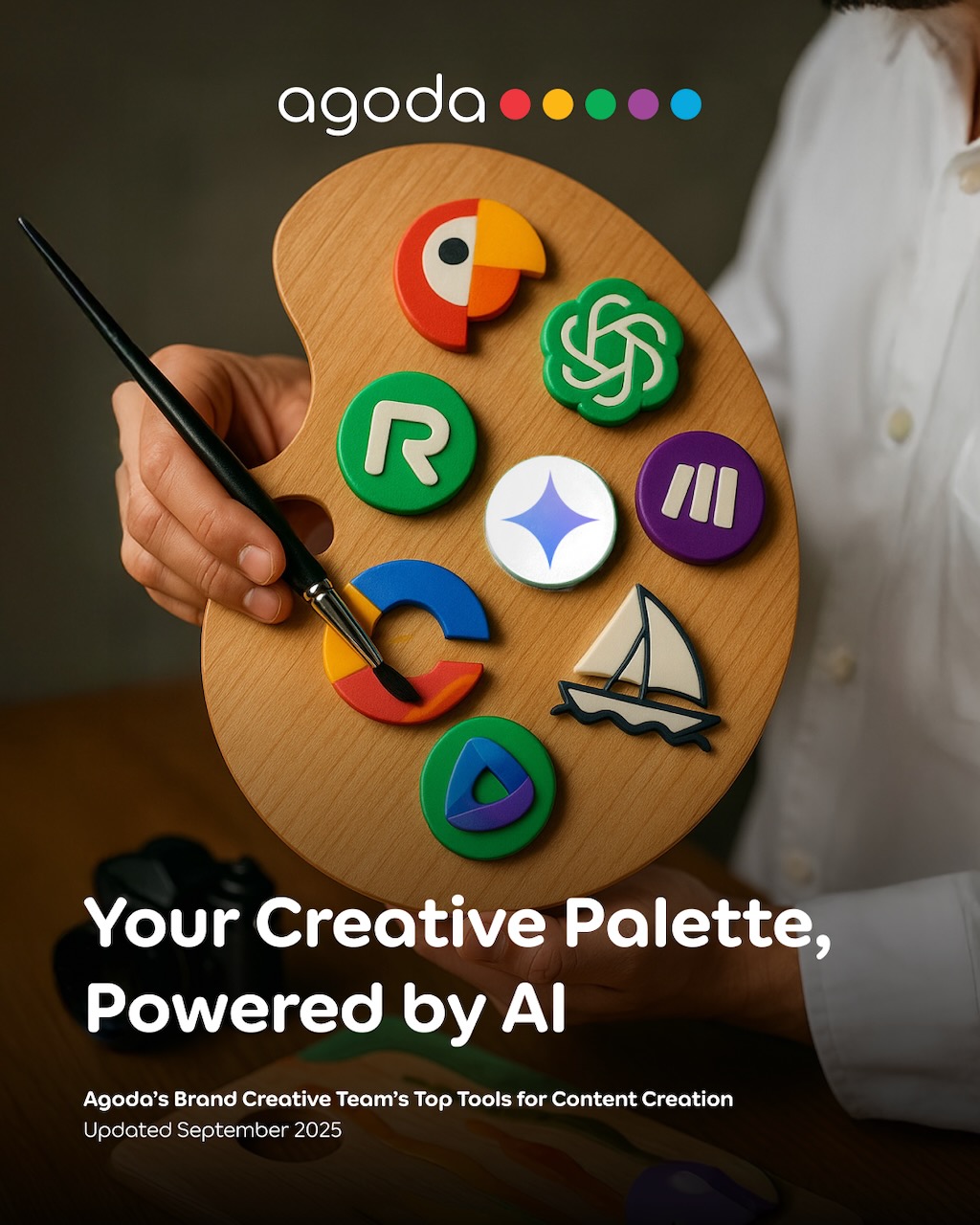
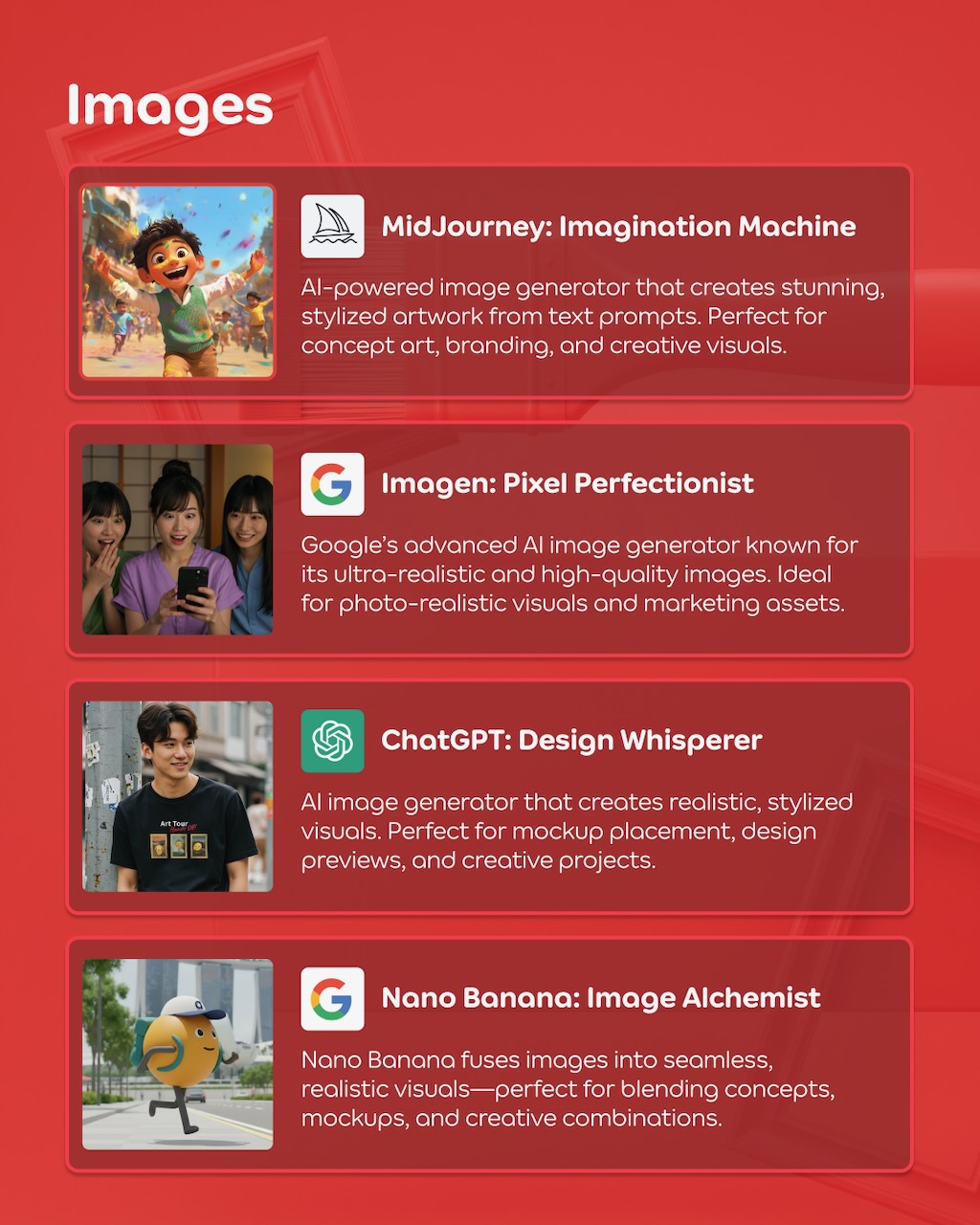
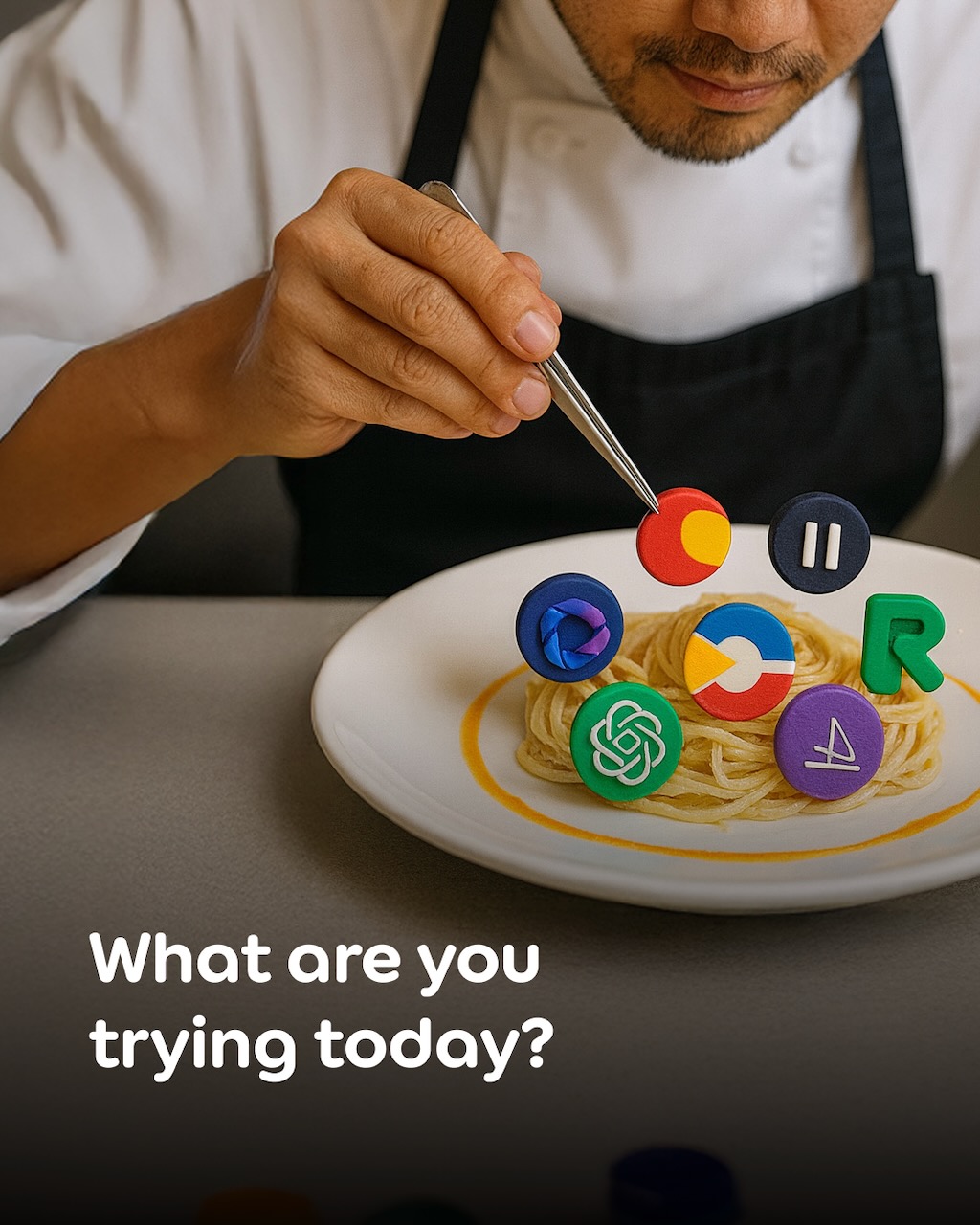
Looking for the best creative AI tools but not sure where to start? From jaw-dropping visuals to polished videos, crisp audio, and bold concepting, Agoda’s Brand Creative Team has tried and tested it all. Now, we’re sharing our must-have AI tools in one handy cheat sheet.

A creative culture that keeps evolving
We’ve now built a culture and a workflow that’s fast, scalable, and flexible—but we’re not done. If anything, the real work starts now. Our focus is shifting towards quality, personalization, and creative excellence. The tools are in place, and our mindset is ready. The next chapter is about pushing our work even further.
Because AI will never stop evolving, neither will we. We can’t predict what’s next, but we’ll meet every new development with curiosity and guide it with our expertise. That’s how we work at Agoda. We believe in experimentation. We believe in progress. And we believe that our creativity is just getting started.
This is our final post in Agoda’s AI in Creativity series. Thank you for following along, and stay tuned to see what we create next!
Catch up on the AI in Creativity series
Part One: Why Agoda’s Brand Team Chose to Explore AI in Creativity
Part Two: What Agoda’s Brand Team Learned from Their Early AI Experiments
Part Three: How Agoda’s Brand Team Scaled Video Output 10x Using AI
Part Four: How Agoda’s Brand Team Found Creative Freedom with AI
Part Five: 4 Lessons from Agoda’s Brand Team: Our Creative AI Playbook (You’re here!)
About the Author
Jennifer Jones is a Global Brand Creative Senior Manager at Agoda.